

A recently surfaced pop-up CHANEL boutique on social media has drawn massive public attention, with G-Dragon and Hiroshi Fujiwara both making special trips to visit and document the space. The beige awning, black storefront, iconic interlocking C logo and classic tailored suits displayed in the window perfectly replicate the familiar visual language of CHANEL’s official retail locations, but the space has no direct official affiliation with the luxury house at all.

This space is in fact 31 Rue Cambon, the brand new special exhibition project from contemporary artist Tom Sachs. Alongside his ongoing collaborative footwear line with Nike, Sachs recently fully converted his long-term New York studio into a complete, fully immersive “CHANEL boutique” installation, and the full layered concept of the work only reveals itself once visitors step inside.
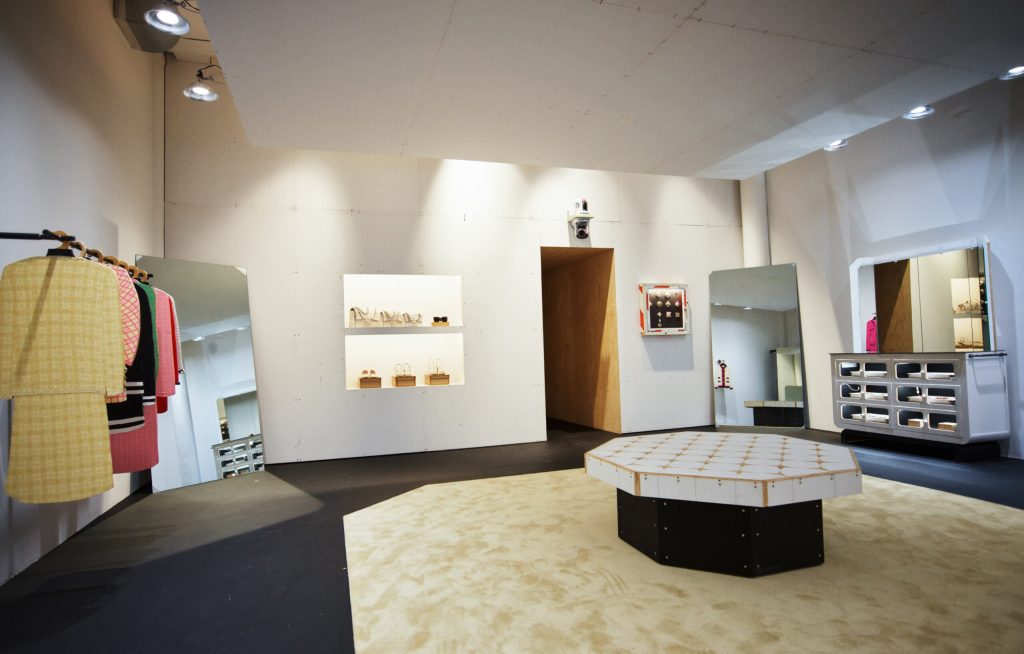
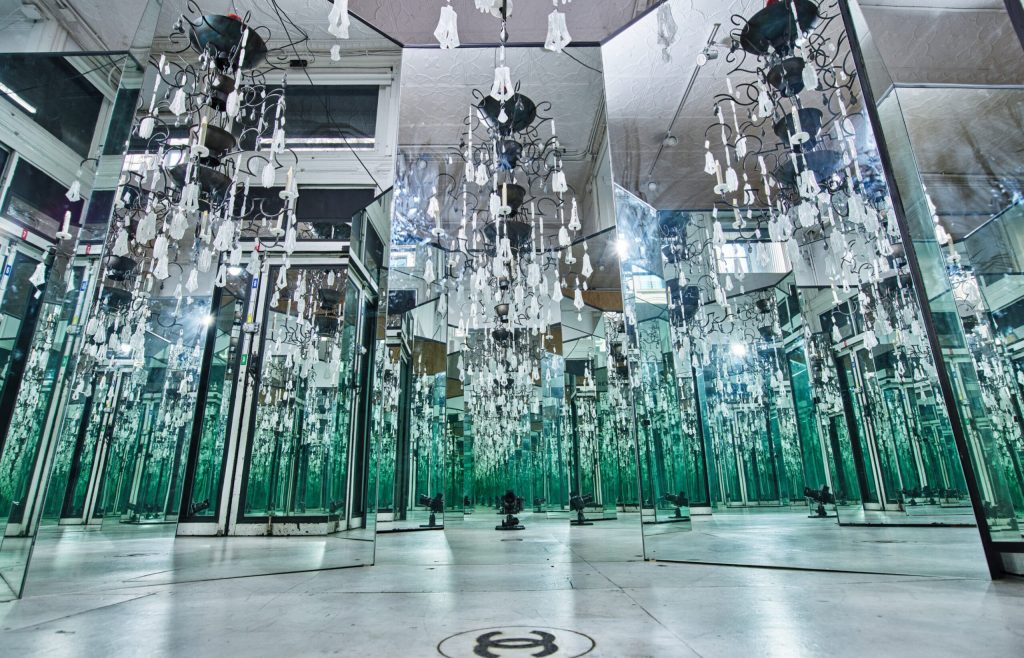
Immediately past the entryway sits an octagonal vestibule fully lined with mirrors, a direct reference to the legendary mirrored staircase inside CHANEL’s historic flagship at 31 Rue Cambon in Paris. The grand, ornate chandelier hanging overhead, which appears to be a standard high-end luxury retail fixture, is in fact hand-assembled entirely from bicycle reflectors, fishing weights and dental-grade UV epoxy resin. Moving deeper into the space, beige carpet, display shelves, seating and carefully calibrated lighting build the exact recognizable atmosphere of a CHANEL luxury retail environment. The classic tweed suits, handbags, footwear, jewelry and branded packaging arranged on hangers and in display cases are all not official brand products. Even the furniture and iconic visual elements pulled directly from Coco Chanel’s private apartment have been recreated and reimagined with a distinct, rough-hewn handmade texture.
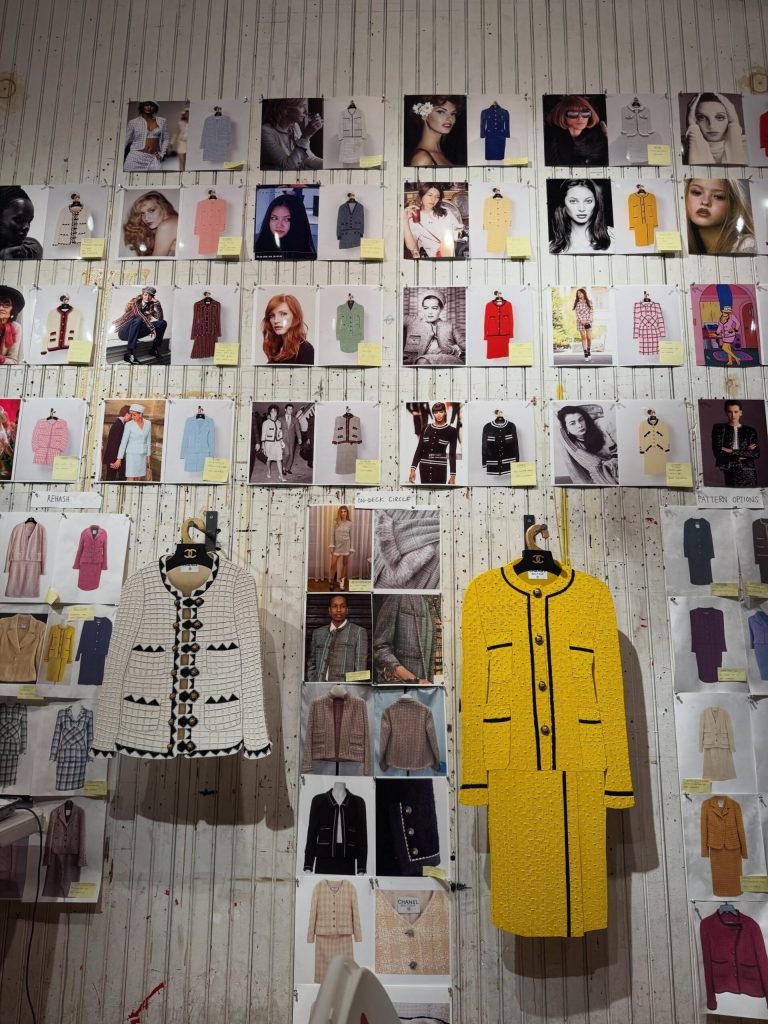
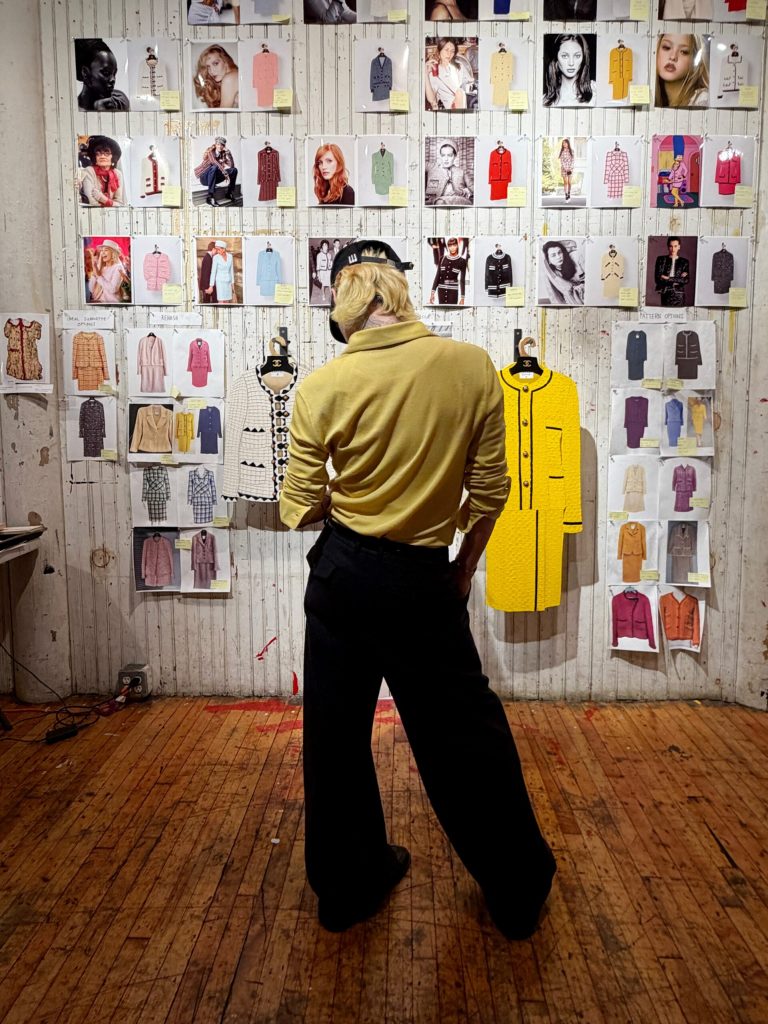
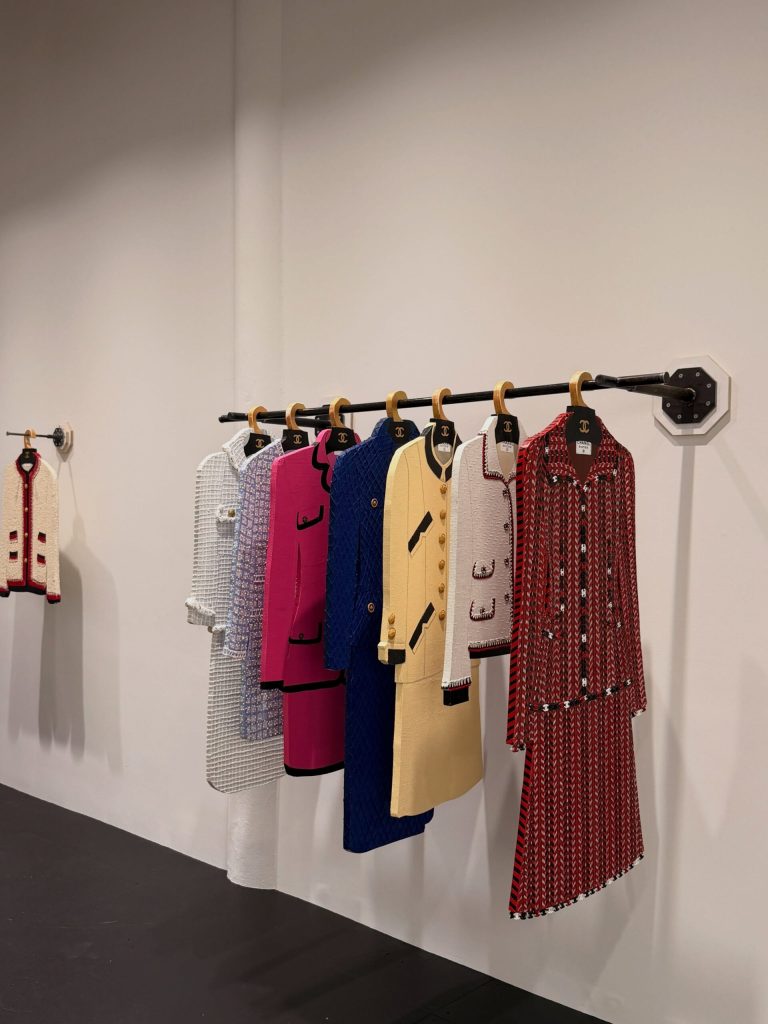
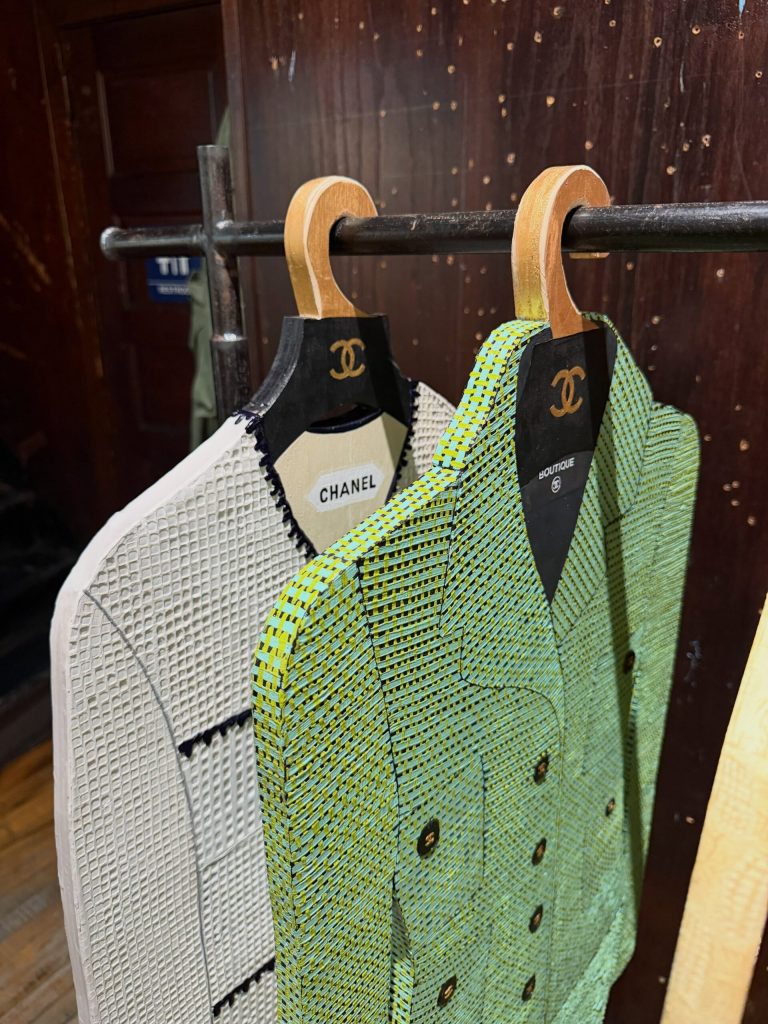
Inside this “fictional” CHANEL store, Tom Sachs has created over 30 sculptural works recreating the house’s iconic tweed jackets and tailored suits. These pieces are not arbitrary designs, but are directly tied to real, documented silhouettes from CHANEL’s extensive archive. His reference pool spans legendary celebrity looks worn by Naomi Campbell, Princess Diana and Elizabeth Taylor, and even includes Marge Simpson from The Simpsons as he combed through decades of CHANEL visual history.
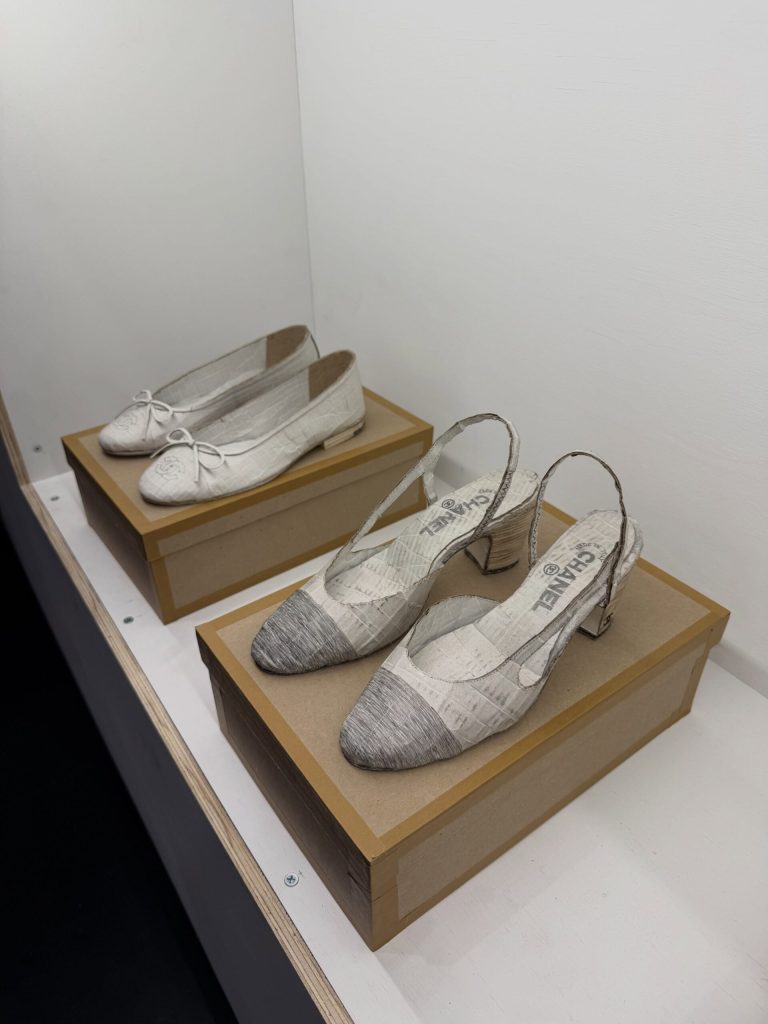
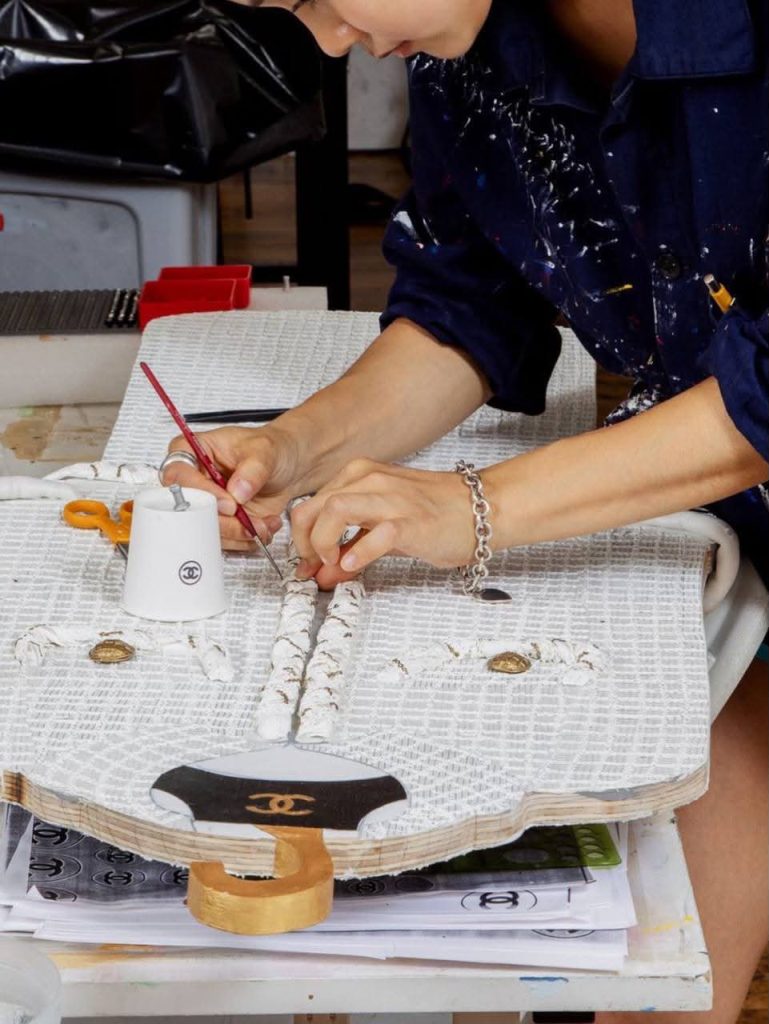
Sachs never set out to make exact replicas of the physical garments themselves, only their recognizable visual silhouette. The vast majority of these “clothing” works are built from plywood, while the handbags and footwear are constructed from cardboard, acrylic and packing tape. To accurately mimic the distinct texture of different generations of CHANEL tweed, Sachs and his studio team developed a fully custom process: scraping away layered coats of paint, extruding lines of pigment through syringes, and repeatedly layering, cutting and hand-coloring the surfaces to create the convincing illusion of woven fabric.
Buttons, trim and embroidery details are all reworked and re-interpreted through Tom Sachs’ signature artistic language, with small Lego pieces even embedded in some of the fine details. A single sculptural suit can take 10 days to two full weeks to complete, and when factoring in the months of experimental work to figure out how to manipulate each unconventional material, the total development timeline for each piece stretches far longer. Over the past year, Sachs has shared that he spent hundreds of hours deeply researching Coco Chanel’s life, the brand’s full archive, its historic atelier systems and the heritage of its Métiers d’Art craft traditions. He even describes Sofia Coppola’s documentary Chanel Haute Couture as a “punk rock zine” dedicated to the full history of the CHANEL archive.
For Sachs, high couture, fine art and even space exploration all share a nearly identical core: none of them have clear upper limits for material or craft, and every final outcome relies on massive amounts of human labor, technical skill and iterative, trial-and-error experimentation. When speaking to interviewers about how the public frames these works as “fakes”, he explained that he has no interest in simply buying and owning an expensive authentic product. He is far more invested in building a real, personal relationship with an object through the act of making it himself, and gaining full understanding of its entire history, as a deliberate alternative to the empty desire of simple material possession.
Q&A
Q: What exactly is this viral “CHANEL boutique” that drew visits from major cultural figures?
A: It is 31 Rue Cambon, the new site-specific special exhibition from contemporary artist Tom Sachs. The entire space is a full conversion of his longstanding New York studio, and it is not an official retail location operated by CHANEL.
Q: What unique creative techniques and materials did Tom Sachs use for the works in the exhibition?
A: Over 30 sculptural tweed suits are primarily constructed from plywood, while handbags and footwear are made from cardboard, acrylic and packing tape. The iconic chandelier is assembled from bicycle reflectors, fishing weights and dental UV epoxy. The team used custom processes including layered paint scraping and syringe-extruded pigment to mimic the texture of real tweed, and even integrated small Lego pieces into fine details.
Q: What sources did Tom Sachs reference during the creation of this exhibition?
A: He drew directly from decades of CHANEL archive silhouettes, including iconic brand looks worn by Naomi Campbell, Princess Diana and Elizabeth Taylor, and even referenced Marge Simpson from The Simpsons. He also conducted deep, extensive research into Coco Chanel’s life, the brand’s full archive and its historic high couture craft heritage.
Q: How does Tom Sachs respond to the public framing of these works as “counterfeits” or “fakes”?
A: He explains that he has no interest in simply purchasing and owning an expensive authentic product. The core of the project is building a genuine, personal connection with the object and its history through the full process of making it himself, as a deliberate alternative to empty, materialistic possession.
Source:NOWRE